Let’s Get Winter Sowing
Today’s post covers WHY Winter sowing seeds works so well for both the seed, pollinators and YOU!
Learn how :
Winter prepares the seed for germination in Spring.
to Winter sow seeds without plastics
Let’s jump in shall we?

Winter sowing is an easy way to grow for pollinators especially if you are new to seed sowing!
Before we jump into how to Winter sow seeds….
Let’s look at how Nature sows & grows seeds~ after all Nature is the expert!
Many native seeds mature in Autumn through the early Winter.
When you don’t ‘clean up’ your plants & garden in the Autumn~ plants seed heads dry and become a vital food source for birds and other wildlife.

The seeds are spread by wildlife and the winds. Seeds met the soil either in the Autumn or melting snows landing amongst grasses or bare soil. There they wait until Spring to germinate and grow.

Take our beloved milkweed for example
These seeds will be carried on the wind thanks to their ‘fluffy kites’ and land on the soil. Then they’ll spend their Winter tucked under the snow dormant and waiting out the cold days until Spring.
Dormancy protects the milkweed seed from germinating during unfavorable conditions - like cold Winter temperatures.
FUN SEED FACT:
It is the changes to the seed coat (called the testa) that does the work of protecting the seeds embryo from the environment AND prevents its growth in less than ideal conditions.
Those conditions are unique for each plant species. Before sowing be sure you know what conditions your seeds require for germination and seedling health.
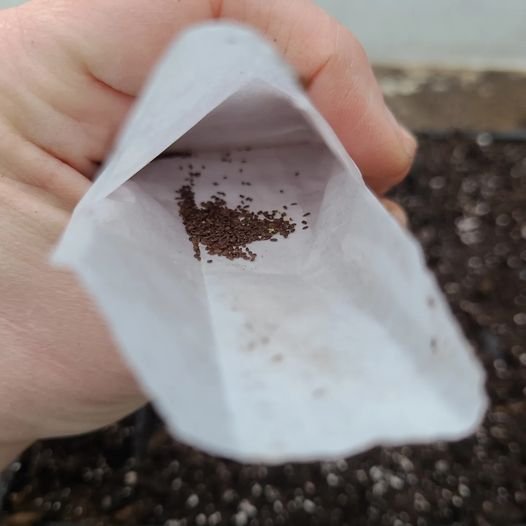
Talk about small but MIGHTY!
(You can see why I recommend using a toothpick for seed sowing!)
Each of these seeds is protected from less than ideal conditions by its seed coat. 5* days and feet of lake effect snow from Lake Ontario won’t hurt these little seeds!
Don’t assume dormant seeds are slackers under the snow though…
Just because a seed is dormant (aka laying about) under the snow doesn’t mean nothing is happening to the seeds!
In fact it is the most important time of a seed's life!
During its Winter ‘lie in’ a seed experiences changes that impact its germination and health as a seedling. Seeds even experience different kinds of dormancy from acid and hormone responses like those of abscisic acid (ABA) and gibberellin; all triggered by changes in their environment.
Changes in the seeds environment like temperature, light and moisture trigger hormones in the seeds shell to slowly soften and trigger germination.
It’s the seeds ‘wake up call’ after it’s long Winter sleep.
Winter sowing without plastic…

Most sources on Winter seed sowing call for sowing any seeds in plastic jugs and trays wrapped in duct tape. These are then placed outside for the Winter until germination in Spring.
Certainly not an Earth-friendly garden practice!
Sooner of later all those jugs, trays and duct tape end up in landfills with plastics in the billions of tons!
As gardeners, we can all make better decisions for our planet and homes. After all our gardens for wildlife shouldn’t kill the planet we’re trying to save!
Here at Lazy Dirt Wildflower Farm…
Winter sowing is VERY different because you’ll find no plastics here!
Instead of fussing with cutting jugs or peat-based ‘seed starting mix’ (which by the way is a HORRIBLE medium for seed starting!) ; you’ll find me enjoying a far easier method of Winter Sowing.
Tools needed:
Seeds that require cold stratification (hint warm weather plants like tomatoes do not need Winter sowing)
Teaspoon, plain stickers or paper tape, and a marker
Vermiculite or clean builder's sand
Mason jars
First label the jar with a label or masking tape with the species, days needed for cold stratification, date you started the mix.
Next, into the labeled mason jar, simply mix 1 part seed with 2 parts dry vermiculite/sand.
Add and mix in enough water to slightly dampen the mix. Close with lid and put in your fridge or garage; somewhere cool about 35 degrees. Mark the dates on your calendar and check the jars every month. You want the mix damp and cold enough so the seeds do not germinate but not freezing!
Want to see this in action? Ask lots of questions?
Join me for a Winter Seed Sowing Party!
Credits & Resources for this post;
Chadwick, Pat. ‘Seed Stratification: Why Does Temperature Make a Difference?’ Piedmont Master Gardeners September 2023-Vol. 9, No 9
Cheng J, Huang H, Liu W, Zhou Y, Han W, Wang X, Zhang Y. Unraveling the Effects of Cold Stratification and Temperature on the Seed Germination of Invasive Spartina alterniflora Across Latitude. Front Plant Sci. 2022 Jun 29;13:911804. doi: 10.3389/fpls.2022.911804. PMID: 35845682; PMCID: PMC9277449.
‘Growing Wildflowers from Seed’ Presentation by Dr. Tom Noland. Wild Ones, Kalamazoo April 30, 202
Finkelstein R, Reeves W, Ariizumi T, Steber C. Molecular aspects of seed dormancy. Annu Rev Plant Biol. 2008;59:387-415. doi: 10.1146/annurev.arplant.59.032607.092740. PMID: 18257711.
McCargo, Heather. ‘Autumn and Winter Seed Sowing in Six Easy Steps’ Wild Seed Project



Did you know there are NATIVE sunflowers?
Here’s 5 reasons to grow native sunflowers … besides them looking amazing interplanted with Anise Hyssop & Zinnias~our favorite ‘rebel flower’